
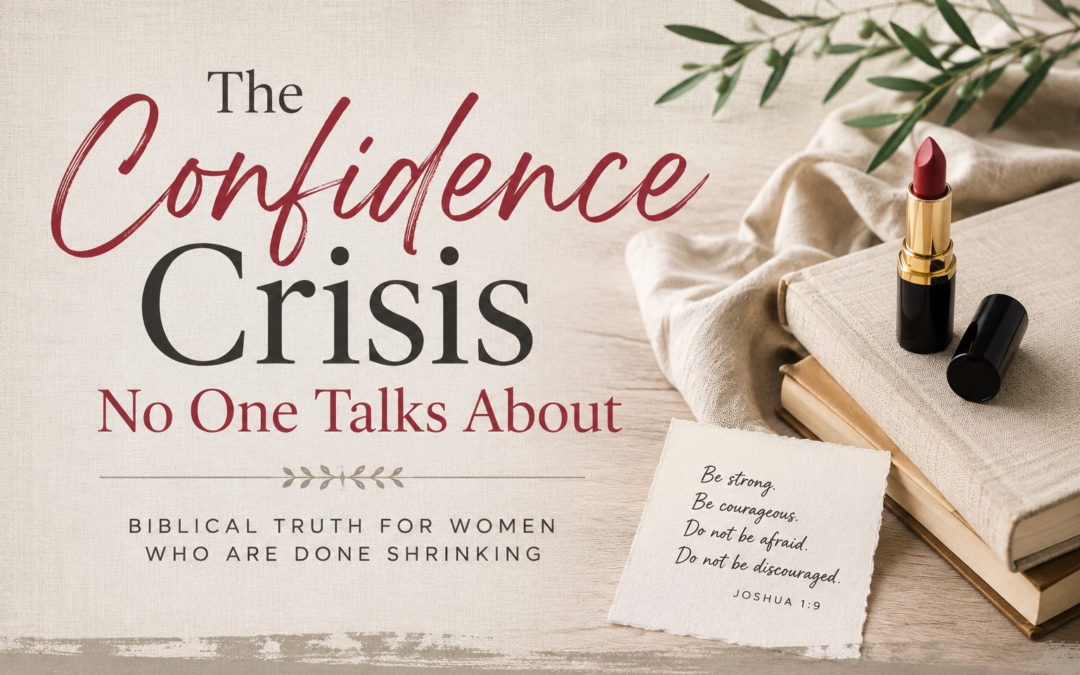
The Confidence Crisis No One Talks About
I have a girl-power playlist on my phone.
Before difficult meetings, hard conversations, or moments when I need a little extra courage, I turn it on and I turn it up. You probably know the kind of songs I’m talking about—determined, strong, unapologetic. These are the kinds that make you sit up straighter and walk a little taller … and pull out the red lipstick.
But right in the middle of me recently parading to the beat of “This Girl is on Fire” around the bedroom, I got to thinking: Why do so many of us need outside reinforcement to feel strong enough for things we are already capable of doing?
Then I realized our culture holds the answer because our culture teaches us to:
Believe in yourself.
Own your power.
Stand in your truth.
Confidence, according to the world’s standards, comes from looking inward. If we just dig deep enough, or work hard enough, or believe strongly enough, then we’ll find the elusive strength we believe we need. We’ve been taught somewhere inside, there’s a magic me power.
However, we Christian women instinctively tend to pull back from the me messages because we know it isn’t about our own strength, but His. Scripture never teaches self-sufficiency and Scripture never points to human attributes as our ultimate source of strength.
So, then we Christ-followers swing the confidence pendulum in the opposite direction. As humility, serving others, and pointing to Christ as the source of our accomplishments is all good and all biblical, we can tend to shrink from confidence all together, forgetting that being made in His image means mirroring His strength. The key word here is “His.”
I have a girl-power playlist on my phone.
Before difficult meetings, hard conversations, or moments when I need a little extra courage, I sometimes turn it on. You probably know the kind of songs I’m talking about—determined, strong, unapologetic. These are the kinds that make you sit up straighter and walk a little taller … and pull out the red lipstick.
But right in the middle of me recently parading to the beat of “This Girl is on Fire” from my closet to the bedroom, I got to thinking: Why do so many of us need outside reinforcement to feel strong enough for things we are already capable of doing?
Then I realized our culture holds the answer because our culture teaches us to
Believe in yourself.
Trust yourself.
Own your power.
Stand in your truth.
Confidence, according to the world’s standards, comes from looking inward. If we just dig deep enough, or work hard enough, or believe strongly enough, then we’ll find the elusive strength we believe we need. We’ve been taught somewhere inside, there’s a magic me power.
However, we Christian women instinctively tend to pull back from the me messages because we know it isn’t about our own strength, but His. Scripture never teaches self-sufficiency and Scripture never points to human attributes as our ultimate source of strength.
So, we Christ-followers swing the confidence pendulum in the opposite direction. Humility, serving others, and pointing to Christ as the source of our accomplishments is all good and it is all biblical.
But somewhere along the way, humility became confused with invisibility.
Here’s how that plays out in the Christian world: A woman who speaks with conviction risks being called prideful. A woman who steps forward risks being accused of wanting attention. A woman who recognizes her gifts often feels compelled to soften her words, qualify her opinions, or immediately redirect every compliment.
We’d rather shrink into the background than be misunderstood or worse … criticized for boldness.
What begins as humility can eventually become a reluctance to steward what God has entrusted.
We’ve all experienced that moment of hesitation before sharing an idea or we’ve waited for permission or an invitation before exercising a spiritual gift. I think many of us will shrink back from opportunities God may very well be placing in front of us.
And the irony is we aren’t trying to be disobedient. We’re trying to walk in humility.
What’s fascinating is that Scripture doesn’t seem nearly as uncomfortable with confidence as we are.
The Bible is filled with people who had every reason to remain silent, stay comfortable, or avoid the spotlight altogether. Yet when obedience required action, these brave heroes stepped forward and trusted God with the consequences.
And, the Bible has plenty of warnings about pride, arrogance, self-exaltation, and trusting in our own strength because those attitudes ultimately separate us from a dependence on God. Pride convinces us we already know the answers and arrogance makes us unteachable. And not surprisingly, self-reliance persuades us that God’s involvement is optional.
A closer look at Scripture reveals a very different picture of confidence.
Consider Esther. Nothing in her story suggests she was naturally bold. In fact, her first response to Mordecai’s request for her to approach the king about Haman’s edict was full of hesitation. Approaching the king without an invitation would be a dangerous, provocative move. She’d put not just her royal position at risk, but her life as well.
Yet Esther eventually stepped forward.
Not because she suddenly felt confident or believed in herself. And not because she knew she’d save the day. Esther made her move because obedience was a higher value than self-protection.
The same can be said of Abigail, Rahab, Deborah, and countless others throughout Scripture. These biblical heroes’ confidence was never rooted in self-importance. Their confidence was rooted in God.
So in the middle of my girl power dance, I realized that my confidence catching fire wasn’t my problem. My problem, like for many of us, was in whom my confidence rested.
Biblical confidence is trusting God enough to step forward before the outcome is known and when risks are at the highest.
Confidence rooted in God becomes especially important when approval is not guaranteed because approval and obedience do not always travel the same road.
A few years ago, after I’d spoken up at an executive meeting with work, word got back to me that one of the attendees said I was negative. My initial instinct was to tell myself to stop speaking up and to sit quietly in these important meetings. And that’s what I did. Over the next few years, I watched others make many of the same observations I had made. The difference between me and them wasn’t the content. The difference was how the content had been received.
This is when I began to realize that I can’t make decisions about my service to God based on other’s opinions. If confidence depends on universal approval, nobody will ever be confident.
Sooner or later, someone will disagree with you or will decide you’re too much—or not enough.
Human approval is a terrible foundation for confidence because it can be withdrawn at any moment.
And this takes me back to the women in Scripture. Their world was vastly different from ours, yet I suspect they understood something many women still wrestle with today: Stepping forward often attracts scrutiny and speaking with conviction invites criticism. Plus, taking action can be misunderstood in a variety of ways.
As we’ve revisited the familiar stories of Esther, Abigail, Rahab, and others throughout our Courage Under Pressure studies, a common thread continues to emerge. Confidence was never rooted in public opinion, favorable circumstances, or guaranteed outcomes. Confidence rested in God’s character long before His plan became visible.
These brave women’s confidence was all about who God is and what His promises are.
So, we can stand upon these truths today: Faithfulness does not require certainty. And trust does not eliminate the possibility of failure.
Trust eliminates the fear that failure has the final word.
Perhaps confidence isn’t the right word after all. Perhaps what we’re really talking about is trust.
Trusting God enough to speak when it would be easier to remain silent; enough to step forward when the outcome is uncertain; and enough to use what He has entrusted to us rather than bury our gifts beneath fear.
The women of Scripture did not change the world because they believed in themselves. These courageous women changed the world because they believed God.
Real confidence has never been about finding strength within ourselves. Real confidence begins the moment trust in God becomes greater than fear.
But feel free to keep the girl-power playlist. A little red lipstick and a little dancing around the room never hurt anybody.
If I perish, I perish,
Laurie
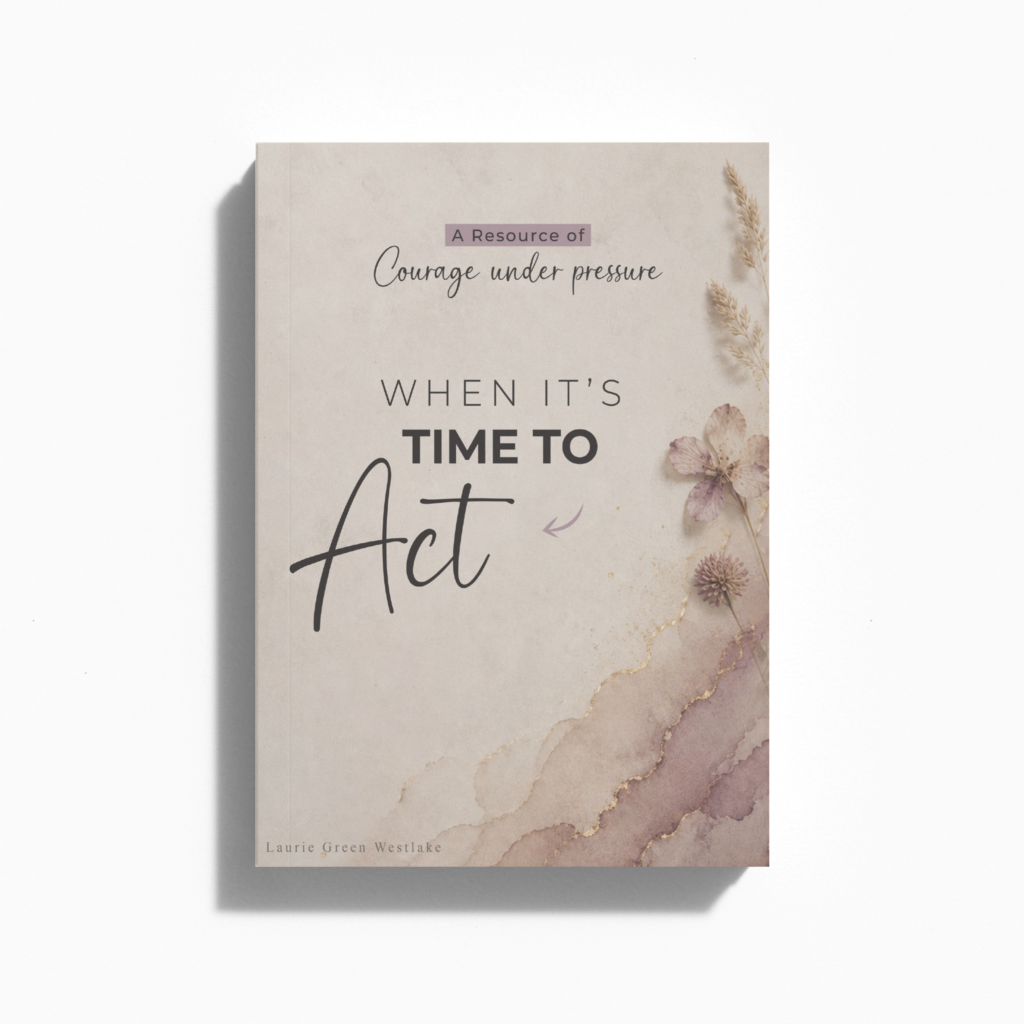
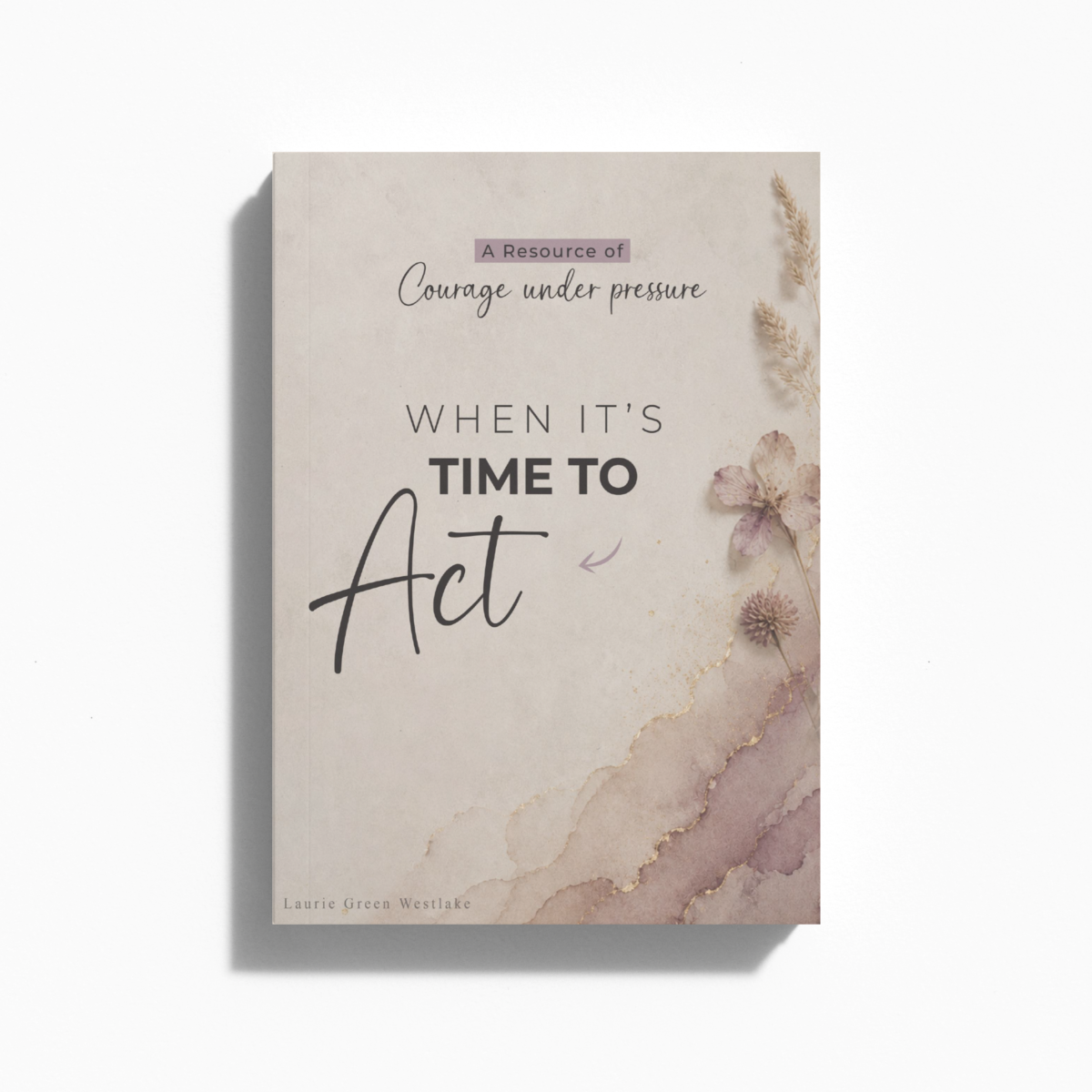
Check out my latest download When it’s Time to Act. When It’s Time to Act is a Scripture-based guide for women facing difficult decisions, uncomfortable obedience, and moments that require courage. Through the stories of Rahab, Abigail, Esther, Leah, Sarah, Deborah, and the Samaritan woman, Laurie Green Westlake explores what it means to respond faithfully when life places you under pressure.

Fear-based emotions have stopped me from being all I can be. I needed to hear this!!